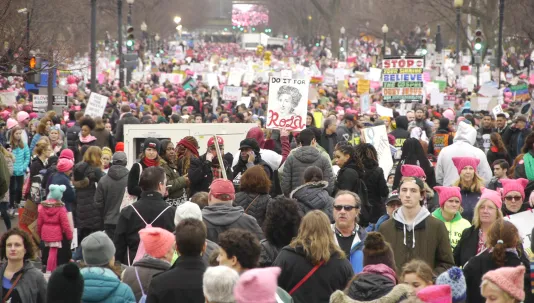
List Center public programs provide points of engagement for both in-person and remote audiences with the full standards of accessibility. We continue to build new audiences across MIT and Cambridge with in-person programs, while reaching a global audience with varied remote offerings.
2025 Annual Report
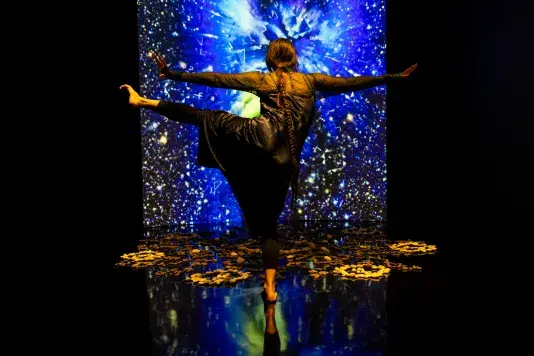
Connect at the List Center
Last year, the List Center launched a new program inviting Boston’s graduate art students to connect with peers from other institutions while exploring the List’s exhibitions and engaging in themes of community, placemaking, and professional development. The popular event has been held at the start of each semester since its inception, with three iterations to date. It has featured activities such as exhibition tours, speed networking, make-kits, and a Graduate Student Talk—all accompanied by food, beverages, and raffle prizes. The List Center has seen strong turnout from artists and students in the Greater Boston area, eager to connect with peers in their field.
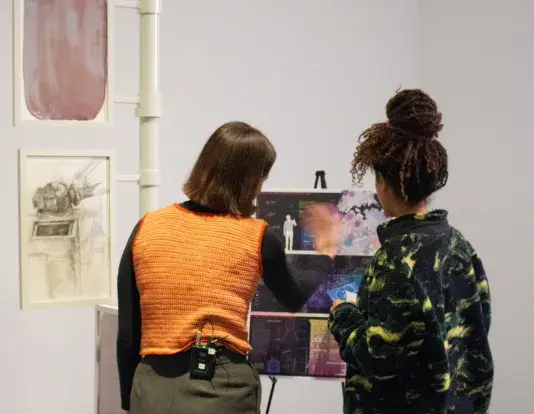
Student Stories
For the past six years, the List Center has interviewed students who have had the opportunity to hang artworks from the Student Lending Art Program in their living space. This year, List staff members Cassidy Westjohn and Gwyneth Jackman interviewed five MIT students from diverse backgrounds and disciplines to hear how the program has impacted them. In this year’s Student Stories, readers hear from Indrani Saha, who describes how her artwork inspired her to begin collecting art, and from Jerry Aloor, who credits the program as a catalyst for her interest in art and later collaborated with the List Center on the Art Breaks series.
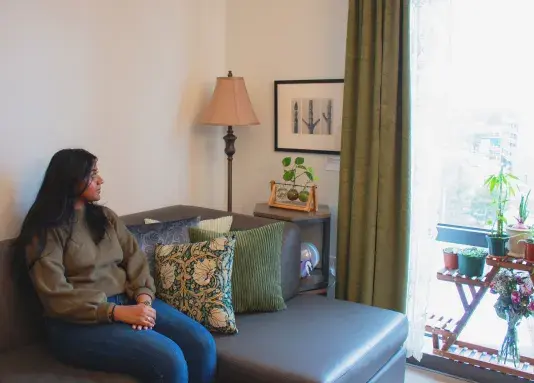
Art Break
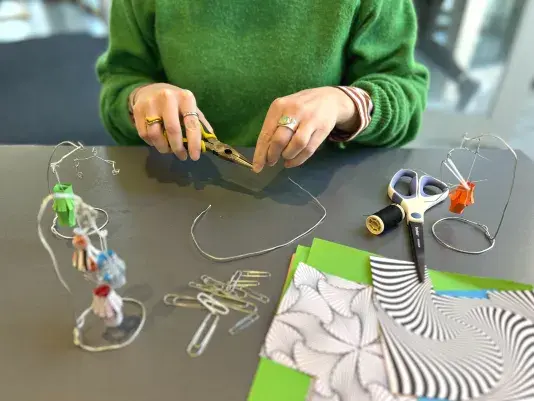
At the end of the fall 2024 semester, the List Center launched a new program, Art Break, designed with mental rejuvenation in mind. Art Break offers students a space to tinker and be creative through drop-in sessions scheduled during finals season. Art supplies and calming beverages were placed in the List Center atrium to invite students to pause and de-stress. The first iteration featured hot MEM tea and origami. In May 2025, the List Center collaborated with MIT’s AeroAstro Department Resources for Easing Friction and Stress (dREFS) and Jasmine Jerry Aloor, a PhD candidate in the Department of Aeronautics and Astronautics. It featured infused waters, snacks provided by dREFS, and materials for creating a wire object with two balanced counterweights.
2025 Max Wasserman Forum: Visions of Sustainability
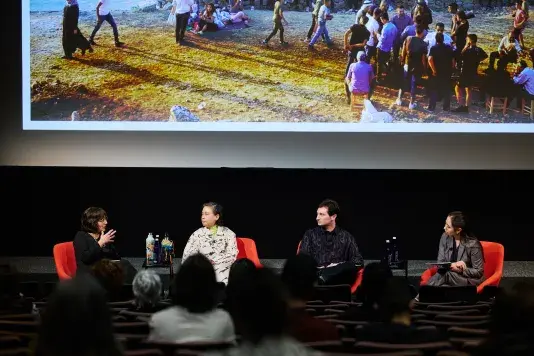
For the 2025 Max Wasserman Forum: Visions of Sustainability, the List Center convened artists, scholars, and curators to discuss climate change in the context of arts and museums. This forum focused on rethinking how art and cultural organizations operate, the disproportionate effects of climate change on vulnerable populations, and the transformative role of art and artists. The keynote lecture was delivered by Torkwase Dyson.
Speakers included artists Amy Balkin, Beatrice Glow, Adam Khalil, Lee Pivnik, Sahar Qawasmi, Jen de los Reyes, Nida Sinnokrot, Lan Tuazon, and Michael Wang, along with curators and scholars Stefanie Hessler, Janelle Knox-Hayes, and Sarah Montross.
Vera List Prize
Each year, the List Visual Arts Center participates in MIT’s Karmel Writing Prize. In 2025, List staff members Emily Garner and Chris Hoodlet served as jurors for the Vera List Prize, which invited student essays focused on the visual arts. With a strong group of submissions, the List Center published the essays on their website to share them with a wider audience.
Ari Peró, who recently earned a double major in Urban Science & Planning and Computer Science and Music, won first prize for their essay, Politics of Visibility: Contemporary Art as a Catalyst for Social Change, which proposes how institutions can become more ethical and inclusive in their approaches to showcasing art and artists. Second prize went to Kartik Chandra, a PhD candidate in Computer Science and Artificial Intelligence. His essay, Learning to Look/See Like a Scientist, recounts how encountering an artwork at the Mauritshuis Museum informed his research in cognitive science.